


Hypertension is one of the most common heart diseases, which is currently diagnosed in every third inhabitant of our planet over 45 years of age.In recent years, the disease has become significantly younger, and among patients with high blood pressure, it is now very common to meet very young people with high blood pressure.The main danger of the pathological condition lies in the complications.High blood pressure can lead to heart attack and stroke, rupture of aneurysms of large blood vessels, severe kidney damage and sharp deterioration of vision.
A person's blood pressure has an upper, cardiac or systolic value, and a diastolic pressure, or its lower, kidney level.According to WHO standards, the norm of these indicators cannot exceed 139/89 mmHg.Art., otherwise it is customary to talk about high blood pressure.Early diagnosis and timely treatment of high blood pressure is a person's chance to prevent the occurrence of pathological changes in many internal organs, which allows them to maintain health and live a full life for many years.
Reasons
Unfortunately, modern medicine has not yet been able to fully reveal all the possible causes of high blood pressure, but most of them are known to doctors.Only an experienced specialist can identify which factor led to the development of the disease, who, during the diagnostic process, uses not only his knowledge, but also the results of numerous studies that confirm or refute the presence of signs of high blood pressure in a person.
The main reason for the increase in blood pressure is the violation of the activity of the human sympathetic-adrenal system, that is, the constant irritation of the center responsible for the narrowing of cerebral vessels.
This can occur as a result of a number of exo- and endogenous factors that contribute to the development of sudden vasospasm.
The symptoms of hypertension can appear in people who have so-called exogenous risk factors for the development of the pathological condition:
- frequent stress and severe nervous tension;
- poor nutrition;
- sedentary lifestyle;
- long working hours, night shift work;
- regular consumption of large quantities of strong alcoholic beverages and smoking;
- drugs;
- intense sports activity.
Among the endogenous factors, age and bad heredity come to the fore, when the disease can be transmitted from parent to child.The following also contribute to the development of high blood pressure:
- vascular damage by atherosclerosis;
- obesity;
- metabolic diseases, especially diabetes mellitus, hyperthyroidism;
- kidney diseases;
- increased calcium and sodium levels in the blood;
- hormonal changes, which are the most common causes of high blood pressure in women during pregnancy and menopause.
Classification
Currently, there is more than one classification of high blood pressure.The disease is usually distinguished by the nature of the course, the presence of complications, the causes of development, pressure indicators and much more.
Modern cardiologists distinguish several degrees of hypertension (depending on the indicators of hypertension):
- 1st degree - the pressure rises to 159-140/99-90 mm Hg.Art.;
- Grade 2 - on the needles of the mechanical tonometer, the indicator is diagnosed as 179-160/109-100 mm Hg.Art.;
- 3rd degree - persistent or intermittent increase in pressure over 180/110 mmHg.Art.
According to the generally accepted WHO classification, the disease has the following stages:
- Stage 1 – temporary increase in pressure without damage to target organs;
- Stage 2 - the presence of signs of damage to internal organs, the main targets of which are the heart, blood vessels, eye structures, brain and kidneys;
- Stage 3 - a stable increase in blood pressure against the background of the development of complications, due to the manifestations of which a person can die.
Hypertensive disease has its own course, including:
- the benign or indolent version of hypertension, when the symptoms of the pathology develop very slowly, over decades, and the risk of complications is assessed to be minimal;
- a malignant disease in which sudden pressure surges, damage to target organs and frequent hypertensive crises are recorded (this version of the disease is difficult to treat with medication).
Symptoms
In the initial stages of its development, the disease is practically asymptomatic, which makes early detection difficult.In such patients, high blood pressure may be discovered incidentally during a medical examination or routine clinic appointment.

The more complex type of high blood pressure is characterized by a number of symptoms that significantly impair a person's quality of life and warrant a referral to a specialist.The main symptom of the disease is an increase in blood pressure above 140/90 mm Hg.Art.This condition causes a headache, which is the result of a reflex narrowing of the cerebral vessels.As a rule, people prone to high blood pressure complain of the appearance of pain in the back of the head and on the temples, which is pulsating in nature, characterized by the severity and suddenness of its development.Such pain and throbbing does not go away after taking painkillers.
Hypertensive patients often experience individual dizziness, which can occur after performing simple work.The symptom is often accompanied by nausea and vomiting, as well as general malaise due to increased intracranial pressure.Constriction of the blood vessels in the hearing aid causes tinnitus, when a person feels that their ears are very blocked and practically loses the ability to normally perceive the sounds of their environment.
Violation of coronary blood flow leads to the development of myocardial ischemia.Such patients develop shortness of breath and chest pain, which can be easily corrected with nitrates.At this time, the organ works in enhanced mode in order to be able to push a dose of blood into the narrowed main vessels.Each attack of angina is accompanied by a rapid pulse, pronounced palpitations, and there is a risk of such a terrible complication of a pathological condition as a heart attack.
In the case of high blood pressure, eye dysfunction is associated with a sharp deterioration of vision and the development of hypertensive angiopathy of the retinal vessels.The pathological process also affects the fundus, which swells and compresses the optic nerve.In this case, the person notices "goosebumps" in front of his eyes, darkened circles and the like.
Complications of high blood pressure symptoms in women most often occur during menopause, when menopause occurs.During this period, hormonal changes occur in the body of the fairer sex, which disrupts the production of biologically active substances that regulate normal blood pressure levels.Therefore, high blood pressure is the most common consequence of menopause in women.
Complications
HD is one of the insidious diseases that is slowly progressive and very often it is diagnosed at the stage of appearance of the first complications of the pathological process.With a constant increase in blood pressure, dystrophic and sclerotic changes occur in the target organs, which lead to severe functional impairment.Above all, the kidneys, brain, heart, visual analyzer and blood vessels are affected by arterial hypertension.
Several risk factors influence the speed and severity of complications of hypertension:
- bad habits, especially smoking;
- sedentary lifestyle and increased body mass index;
- elevated blood cholesterol and hyperglycemia;
- frequent stress;
- lack of potassium and magnesium in the body;
- age-related changes;
- hereditary tendency.
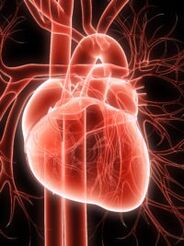
In the case of hypertensive disease, the heart is forced to work under conditions of increased stress, which means that the blood has to be pushed into narrowed blood vessels.Over time, the wall of the heart muscle thickens and the person experiences left ventricular hypertrophy and oxygen starvation of the heart muscle.
From the side of the heart, there are many complications of high blood pressure:
- ischemic disease;
- angina pectoris;
- atherosclerosis of the coronary arteries;
- an acute form of heart failure in the form of a heart attack;
- chronic heart failure.
High blood pressure causes the appearance of brain disorders in a person, which in practice manifests itself in the form of severe dizziness, headaches, tinnitus, memory loss and much more.Complex cerebral complications of high blood pressure have many possibilities:
- encephalopathy with vestibular disorders;
- ischemic and hemorrhagic stroke;
- cognitive impairment of brain activity.
As you know, the kidneys regulate the amount of water and salt in the body.But if the blood pressure rises, they can fully perform their main task.This adds to a number of complications, including:
- kidney failure;
- dysfunction of filtration and fluid separation;
- nephrosclerosis.
Such abnormalities lead to the development of many symptoms in hypertensive patients that indicate kidney pathology.The sick person begins to complain of general weakness, malaise, swelling and nausea for no reason.
Eye damage is manifested by retinal hemorrhages, swelling of the optic nerve head, and progressive loss of vision.On the part of the peripheral vessels, the most dangerous complication in arterial hypertension is the dismemberment of their walls, including the well-known aortic aneurysm, which develops without symptoms and often causes sudden death.
Diagnostics
The diagnosis of hypertension by establishing the stage and degree of development of the disease is an important step towards prescribing the appropriate treatment of the pathological condition.That is why, when the first signs of hypertensive disease appear, immediately contact a medical institution to find out the causes of high blood pressure and methods of correction.
Diagnostic measures for suspected high blood pressure include a number of laboratory and instrumental tests, including:
- laboratory blood test for potassium and magnesium, creatinine, bad cholesterol, glucose, etc.to determine its level;
- biochemical examination of urine by determining the amount of protein;
- electrocardiography (ECG);
- ultrasound examination of the heart;
- Doppler flow meter;
- fundus examination.
The diagnostic procedure for high blood pressure, which allows determining the degree of damage, consists of two stages:
- the first stage is determining the clinical manifestations of the disease from the words of the hypertensive patient and obtaining the results of further tests;
- the second stage is a special examination that allows determining the exact extent of the disease and the presence of complications in the patient using magnetic resonance therapy (MRI) or X-ray examination.
Daily blood pressure measurement allows you to get an accurate picture of the course of the disease.Thanks to this, you can determine the range of pressure fluctuations during the day and determine its average, which characterizes the degree of high blood pressure.The main disadvantage of such research is the high cost.
Treatment
Treatment of exacerbation of high blood pressure should be carried out in a cardiology hospital, where it is possible to continuously monitor the blood pressure level.In addition, if necessary, the doctor can modify the patient's treatment plan and prescribe more effective drugs in each specific clinical case.
Treatment of the disease begins with the appointment of a special diet, which strictly limits table salt, fatty and fried foods, as well as offal, smoked meats and flour products.The purpose of nutrition for hypertensive patients is to improve the general condition, prevent the development of edema, normalize weight, and the like.
According to the new European recommendations, the treatment of high blood pressure should be comprehensive and necessarily include a number of drugs aimed at lowering blood pressure and eliminating the risk of developing a malignant version of the disease or developing complications of the pathological condition.Some of the most common classes of drugs used to treat high blood pressure include:
- alpha blockers;
- ganglion blockers;
- ACE inhibitors;
- beta blockers;
- calcium channel blockers;
- diuretics.
The doctor pays special attention to the prescription of diuretics.The fact is that not all diuretics are safe for the body of patients with high blood pressure due to the release properties of potassium.That is why taking such drugs should be combined with the use of potassium supplements in addition to monitoring the biochemical composition of the blood.In addition, diuretics not only lower blood pressure, but also eliminate tissue swelling by removing excess sodium.
Self-treatment of high blood pressure is strictly prohibited.
Also, it is not recommended to use traditional antihypertensive drugs without a doctor's approval.Prohibited activities, as the main contraindications, can trigger an emergency hypertensive crisis and the need to immediately place the patient in a specialized hospital in order to determine the causes of complications and determine further tactics for their elimination.

Prevention
In order to prevent high blood pressure, it is necessary to implement a series of measures aimed at timely identification and elimination of the risk of the development of the pathological condition, as well as stabilization of already high blood pressure.In order to prevent the occurrence of the first signs of the disease, a person should normalize his lifestyle, stop bad habits and salt consumption, increase physical activity and lose weight.Particular attention should be paid to the health of potential patients with a hereditary risk of developing hypertension.This group of people should always have a pressure measuring device at hand to monitor its condition.
Blood pressure problems can be prevented by:
- leads an active lifestyle (physical therapy, fitness, massage, walking in the fresh air, skiing, swimming in the pool) and regularly works out in the gym;
- stop eating junk food, smoking and drinking alcohol;
- reduce salt intake to 3-4 g per day;
- forbid yourself to eat foods rich in animal fat, preservatives and cholesterol;
- keep a clean daily routine and practice adequate sleep;
- prevents the appearance of excessive fat deposits that cause obesity;
- prevention of stressful situations;
- regularly perform preventive examinations with a cardiologist and take the necessary tests;
- At the first signs of increased blood pressure, consult a doctor immediately.
People who have inherited a tendency to hypertension should pay attention to their health, exercise and undergo regular check-ups.A ready diagnosis of hypertension includes clinical observation of patients and, if necessary, referral to a disability assessment committee.